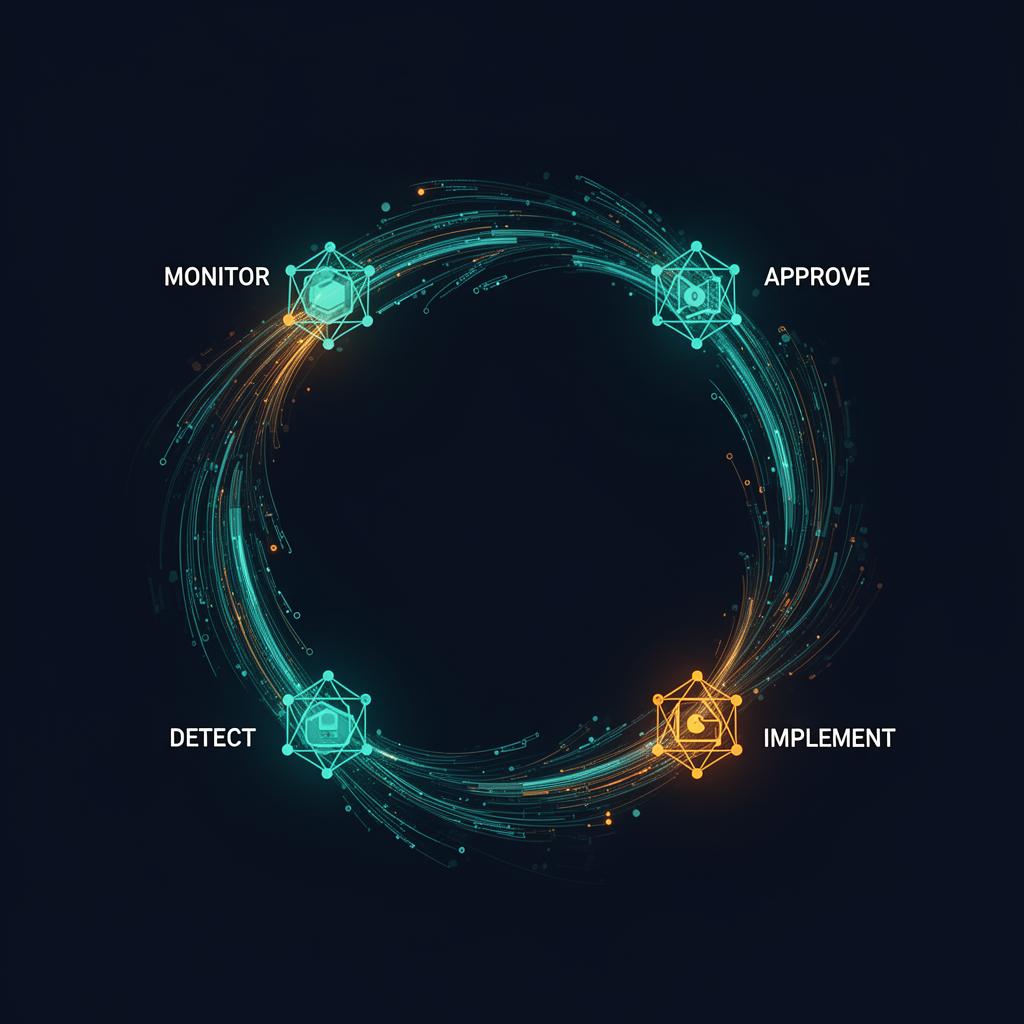
Closed-Loop Engineering
What happens when you stop managing product development and start letting your tools do the listening for you. Fifteen years of tooling compressed into one continuously running loop.
Exploring the future of software development in the age of AI.
What happens when you stop managing product development and start letting your tools do the listening for you. Fifteen years of tooling compressed into one continuously running loop.

The web is being re-indexed by agents making decisions, not crawlers building search rankings. If your content requires JavaScript to surface, agents move on. Static markdown, a discovery layer, and explicit permissions. That's the baseline now.

I thought AI was about output speed. It's about judgment preservation. I thought documentation was overhead. It's the primary output. Here's what I learned.
Your prompts contain business logic and competitive advantage. They're stored in plaintext by vendors who can read them. Nobody's talking about this.
Ceremonies sized for 10 people applied to 3 people. Meeting overhead that exceeds work time. The coordination apparatus itself is now the bottleneck.

You can build faster than you can understand. That's the danger. Systems that work but nobody comprehends become unmaintainable surprisingly fast.

Full ADRs take 30 minutes. Decisions happen every hour. The math doesn't work. Here's a 30-second format that does.
AI doesn't remember previous sessions. But AI also never forgets what you tell it. The amnesia problem is your problem — you're not giving AI the context to remember.

Sprints feel productive. Velocity charts look good. But output without understanding is cosplay. Real productivity includes context preservation.

Intent before automation. Prompts as IP. Decisions as liabilities. Risk made explicit. Memory as infrastructure. Learning that compounds.

Not everything needs documentation. Some things need it desperately. Here's how to tell the difference.
Two people with AI can match what ten people did before. But only if you actually reduce to two people. The coordination overhead of ten eats the gains.

Logging decisions is step one. Connecting them, learning from them, making them searchable — that's decision intelligence. Go beyond the log.
The bottleneck was writing code. Now it's understanding code. Your process didn't get the memo. Time for an update.

Who preserves context? Who manages prompts? Who ensures learning compounds? Nobody. The role doesn't exist. It should.

Without evidence, opinions stay opinions. When AI can generate anything, evidence is how you know what actually works. Measure or guess.

Process overhead compounds like technical debt. The ceremonies you don't need slow you down every sprint. Pay down the process debt.
Your prompts are scattered everywhere. Here's a practical 30-day plan to collect, organize, and version them into a real system.

Day 1, everyone remembers. Week 2, details blur. Month 3, only participants remember. Month 6, the reasoning is gone. Act accordingly.

Your prompts contain business logic. You store them in tools where vendors can read them. That's intellectual property exposure you may not realize.
Most prompt tools focus on testing and deployment. They miss the bigger problem: prompts encode thinking that needs preservation, not just management.
You document after shipping. By then, context is gone. Document before and during instead. The sequence matters.
You version your code. You version your configs. Your prompts are more valuable. Version them.
Architecture Decision Records take 30+ minutes. Decisions happen every hour. The format doesn't fit the pace. What fits instead?

Your team writes prompts every day. Where do they go? Chat logs that disappear. Personal files. Memory. You're losing institutional knowledge constantly.
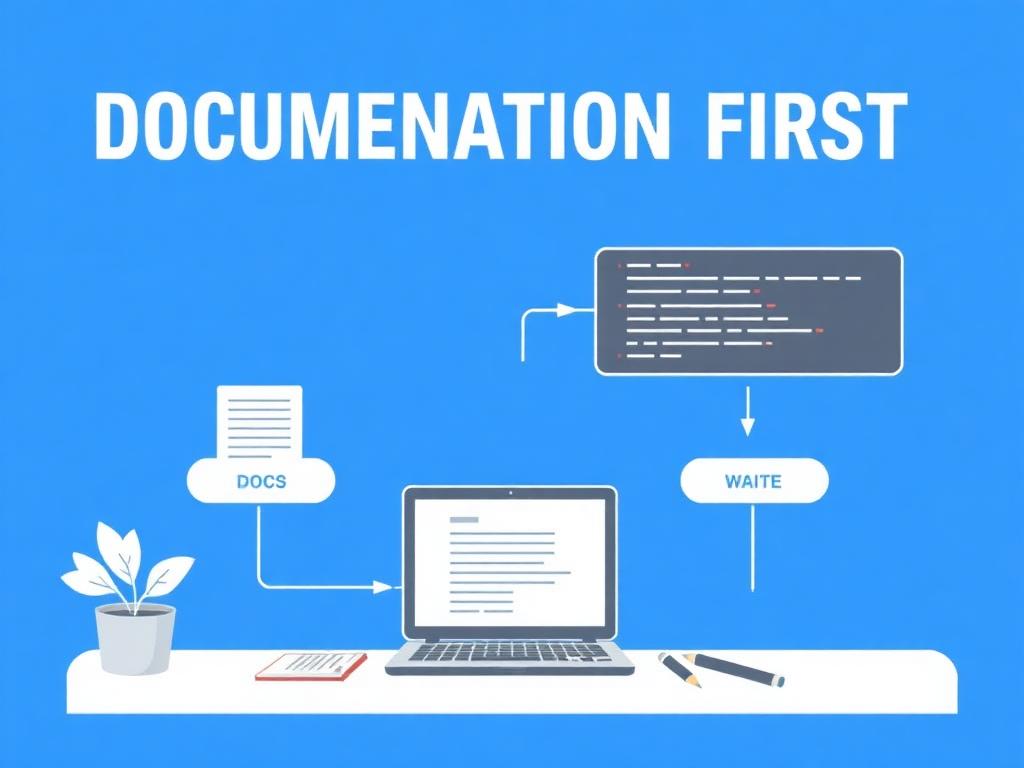
Most documentation is written once and read never. Here's how to create documentation light enough to write and useful enough to read.
The 10x developer was someone who wrote 10x more code. AI writes unlimited code. The new skill is judgment, not output. Different game entirely.

Every decision creates maintenance burden. Someone will need to understand, maintain, or change what was decided. Treat decisions accordingly.
15 minutes × 5 people × 5 days = 6+ hours per week. For information that could be shared in writing. Question the ritual.

Velocity measures output. AI provides unlimited output. The new scarcity is understanding. Measure that instead.

Stop waiting for the next framework. There isn't one. The right approach is context-dependent, evolving, and yours to figure out.
Every project generates learning. Most teams lose that learning within weeks. Without systems to preserve knowledge, you pay full tuition every time.

You spent 45 minutes writing a detailed ticket. AI completed the work in 10 minutes. The overhead now exceeds the work. Something is wrong.
Agile emerged when coding was slow and requirements changed. Now coding is instant and change is constant. The original constraints are gone.

AI systems fail differently than traditional software. Confident wrongness, drift, encoded assumptions — these risks compound silently. Document them or suffer.
Most people start prompting before they're clear on what they want. The result: hours iterating toward a vague target. Start with intent instead.

Every undocumented decision will be made again. Someone will face the same problem, not know you already solved it, and solve it differently.

Velocity measures output. AI makes output unlimited. Your velocity graph means nothing anymore.

When AI writes the code, the human's job is providing context. Context quality determines output quality. Context is the new skill.

Code can be regenerated. Prompts encode the thinking that produces good code. Protect your prompts like the intellectual property they are.

Writing code was the bottleneck. AI removed it. Now context retention is the bottleneck. But most teams are still optimizing for the old constraint.
AI-assisted implies AI is the helper. That's backwards. When AI writes most of the code, the human is the assistant. Time to update our vocabulary.